missing translation for 'onlineSavingsMsg'
Learn More
Learn More
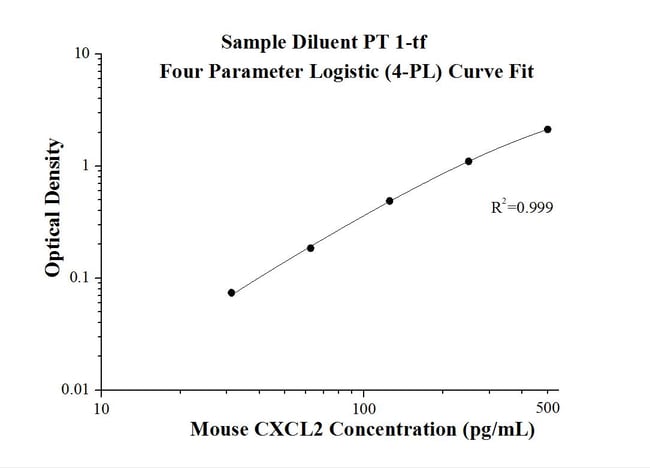
Description
- The assay recognizes mouse CXCL2. An antibody specific for CXCL2 has been pre-coated onto the microwells.
- The CXCL2 protein in samples is captured by the coated antibody after incubation. Following extensive washing, another antibody of biotinylated specific for CXCL2 is added to detect the captured CXCL2 protein.
- For signal development, Streptavidin-HRP is added, followed by Tetramethyl-benzidine (TMB) reagent.
- Solution containing sulfuric acid is used to stop color development and the color intensity which is proportional to the quantity of bound protein is measurable at 450nm with the correction wavelength set at 630 nm
- Cxcl2, also known as macrophage inflammatory protein 2-alpha (Mip2-alpha), is a member of CXC chemokine family that binds to CXC chemokine receptor 2 (Cxcr2).
- Cxcl2 is mainly produced by macrophages, endothelial cells, epithelial cells and tumor cells. Cxcl2 plays important roles in various biological progresses such as angiogenesis, inflammation, immune response and cancer biological behaviors.
- Under inflammatory conditions in CNS, microglia and astrocytes may secrete Cxcl2 as well as other chemokines, which induces chemotaxis and infiltration of circulatory neutrophils.
- Indeed, previous studies suggest that Cxcl2 is involved in Alzheimer disease, multiple sclerosis and brain ischemia.
Specifications
Specifications
| Accession Number | NP_033166 |
| Assay Range | 31.25 to 500 pg/mL |
| Assay Sensitivity | 20.5 pg/mL |
| Certifications/Compliance | ISO 13485 |
| Detection Method | Sandwich ELISA, Double Antibody |
| Immunoassay Kit Format | Coated ELISA Kit |
| Sample Type | Plasma, Serum |
| Substrate | DAB |
| Target Species | Mouse |
| Gene ID (Entrez) | 20310 |
| Show More |
Safety and Handling


Product Identifier
- 96TEST Human TIMP1 ELISA Kit
- Warning
- Serious eye damage/eye irritation Category 1
- Serious eye damage/eye irritation Category 2
- Skin corrosion/irritation Category 2
- Specific target organ toxicity Category 3
- H302-Harmful if swallowed.
- H315-Causes skin irritation.
- H318-Causes serious eye damage.
- H319-Causes serious eye irritation.
- H332-Harmful if inhaled.
- H335-May cause respiratory irritation.
- P201-Obtain special instructions before use.
- P202-Do not handle until all safety precautions have been read and understood.
- P234-Keep only in original container.
- P264-Wash skin thoroughly after handling.
- P270-Do not eat, drink or smoke when using this product.
- P273-Avoid release to the environment.
- P280-Wear protective gloves/protective clothing/eye protection/face protection.
- P301+P310-IF SWALLOWED: Immediately call a POISON CENTER/doctor /
- P301+P312-IF SWALLOWED: Call a POISON CENTER or doctor/physician/ if you feel unwell.
- P302+P352-IF ON SKIN: Wash with plenty of water/soap.
- P304+P340-IF INHALED: Remove person to fresh air and keep comfortable for breathing.
- P308+P313-IF exposed or concerned: Get medical advice/attention.
- P330-Rinse mouth.
- P362-Take off contaminated clothing.
- P405-Store locked up.
- P501b-Dispose of contents/container in accordance with local/regional/national/international regulations.
- MIXTURE LIST-Contain: Sulphuric Acid, Tetramethylbenzidine
Product Title
By clicking Submit, you acknowledge that you may be contacted by Fisher Scientific in regards to the feedback you have provided in this form. We will not share your information for any other purposes. All contact information provided shall also be maintained in accordance with our Privacy Policy.
Spot an opportunity for improvement?