missing translation for 'onlineSavingsMsg'
Learn More
Learn More
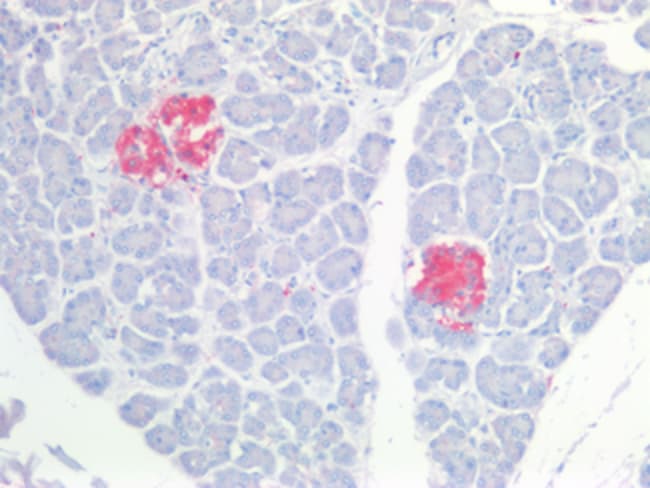
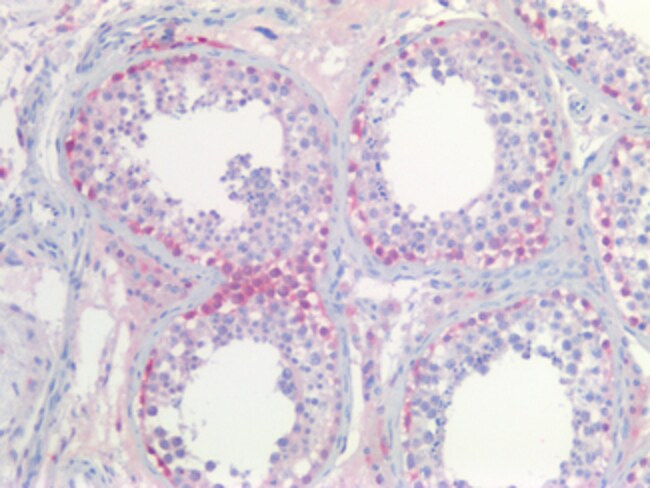
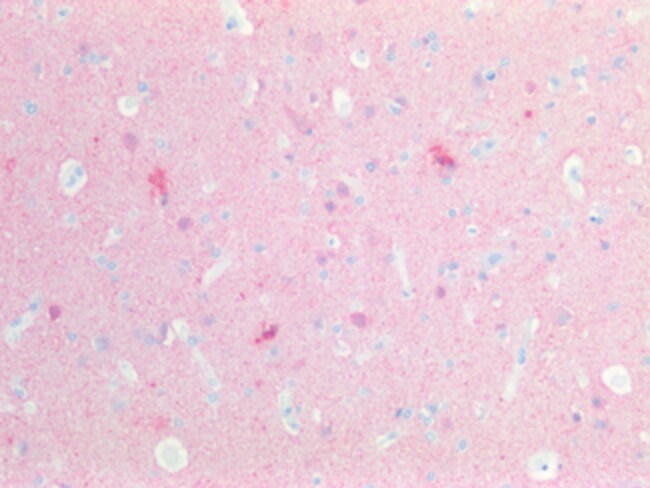
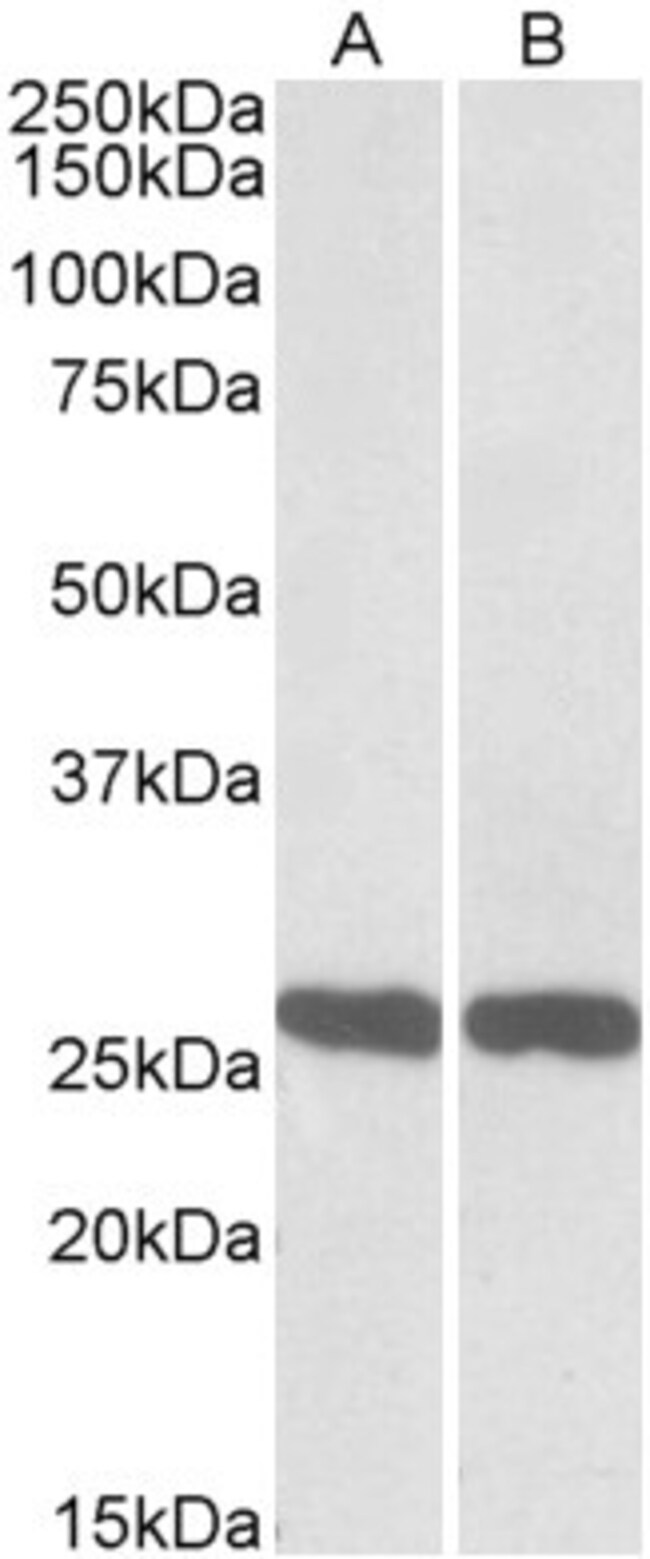
Invitrogen™ PGP9.5 Polyclonal Antibody
Description
This antibody is predicted to react with bovine, canine and porcine based on sequence homology. This antibody has been successfully tested in a Sandwhich ELISA as both a capture and a detection antibody in combination with PA5-19349.
PGP9.5 (Protein gene product 9.5, UCH-L1, PARK5) is a neuron specific protein, structurally and immunologically distinct from neuron specific enolase. PGP9.5 has a molecular weight of 27 kDa and was first identified by high resolution two dimensional PAGE. PGP9.5 is a member of ubiquitin carboxyl-terminal hydrolase family 1 (peptidase family C12) with a ubiquitin carboxyl-terminal hydrolase domain. PGP9.5 is well known for having ubiquitin hydrolase and ligase activities that hydrolyzes small C-terminal adducts of ubiquitin to generate ubiquitin monomers. PGP9.5 is present in neurons and nerve fibers at all levels of the central and peripheral nervous system, in neuroendocrine cells, in segments of the renal tubules, in spermatogonia and Leydig cells of the testis, in ova and in some cells of both the pregnant and non-pregnant corpus luteum. Over expression of PGP9.5 leads to non-small cell lung cancer while decreased expression leads to Huntington disease and Alzheimer disease. Since PGP9.5 is present in cellular inclusions, it can be a useful as a neuronal marker and in the studies of neurodegenerative disorders such as with Parkinson disease.

Specifications
Specifications
| Antigen | PGP9.5 |
| Applications | Immunohistochemistry (Paraffin), Western Blot, Western Blot |
| Classification | Polyclonal |
| Concentration | 0.5 mg/mL |
| Conjugate | Unconjugated |
| Formulation | TBS with 0.5% BSA and 0.02% sodium azide; pH 7.3 |
| Gene | Uchl1 |
| Gene Accession No. | P09936, Q00981, Q9R0P9 |
| Gene Alias | AW822034; C88048; epididymis luminal protein 117; epididymis secretory protein Li 53; gad; gracile axonal dystrophy; HEL-117; HEL-S-53; MGC133697 protein; NDGOA; neuron cytoplasmic protein 9.5; OTTHUMP00000218137; OTTHUMP00000218139; OTTHUMP00000218140; OTTHUMP00000218141; PARK5; PGP 9.5; PGP9.5; PGP95; protein gene product 9.5; R75593; ubiquitin carboxyl-terminal esterase; ubiquitin carboxyl-terminal esterase L1 (ubiquitin thiolesterase); ubiquitin carboxyl-terminal hydrolase isozyme L1; ubiquitin carboxyl-terminal hydrolase L1; ubiquitin carboxy-terminal hydrolase L1; ubiquitin C-terminal hydrolase; ubiquitin C-terminal hydrolase 1; ubiquitin C-terminal hydrolase L1; ubiquitin thioesterase L1; ubiquitin thiolesterase; ubiquitin thiolesterase L1; UCHL; UCHL1; UCH-L1; UCHL-1 |
| Gene Symbols | Uchl1 |
| Show More |
Product Title
By clicking Submit, you acknowledge that you may be contacted by Fisher Scientific in regards to the feedback you have provided in this form. We will not share your information for any other purposes. All contact information provided shall also be maintained in accordance with our Privacy Policy.
Spot an opportunity for improvement?