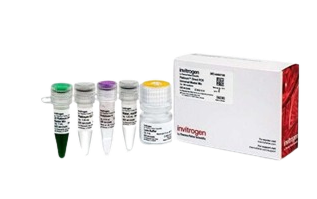
Hot Start PCR Reagents and Kits

Useful Links
Save Now - Exclusive Deals

Product Code 4919369

Product Code 8739012

Product Code 4926873

Product Code 4926954

Product Code 4919386

Product Code 15420574

Product Code 4926872

Product Code 6936020

Product Code 4926955

Product Code 15809854

Product Code 7184560

Product Code 4919371
Must Have

Product Code 8449031

Product Code 15545053

Product Code 8449028

Product Code 8889008
Product Code 6936059

Product Code 4919368
Complete Your Order - Great Deals

Product Code 10321515

Product Code 4918084

Product Code 15224438

Product Code 4919378
FAQ
- Increased Specificity: Hot-start PCR reagents help prevent non-specific amplification and primer-dimer formation. By keeping the DNA polymerase inactive until the initial denaturation step, these reagents reduce the likelihood of these unwanted reactions occurring at lower temperatures
- Improved Yield: By reducing non-specific amplification, hot-start PCR can lead to a higher yield of the desired product. This is because the DNA polymerase remains active only when the reaction is at the optimal temperature for specific primer binding
- Enhanced Sensitivity: Hot-start PCR allows for the detection of low-abundance targets by minimizing background noise that can result from non-specific amplification.
- Convenience: Many hot-start PCR reagents are designed to be easy to use, often requiring minimal changes to standard PCR protocols. Some reagents are chemically modified or antibody-bound to inhibit the polymerase, which is then activated by the initial denaturation step
Overall, hot-start PCR reagents contribute to more reliable and reproducible results in PCR applications
The primary difference between hot-start PCR and normal PCR lies in the activation of the DNA polymerase enzyme:
Enzyme Activation:
In standard PCR, the DNA polymerase is active as soon as it is added to the reaction mixture. This can lead to non-specific amplification and primer-dimer formation at lower temperatures before the thermal cycling begins.´In hot-start PCR, the DNA polymerase is initially inactive. It is activated only after the reaction mixture is heated to the initial denaturation temperature. This prevents the enzyme from acting on the DNA at lower temperatures, reducing non-specific amplification and primer-dimer formation.
Mechanism of Inactivation:
In normal PCR, no inactivation mechanism is used; the enzyme is fully active at all times. In Hot-Start PCR, various mechanisms can be used to inactivate the enzyme:
- Antibody-mediated: Antibodies bind to the DNA polymerase, inhibiting its activity until the high temperatures of the initial denaturation step cause the antibodies to denature and release the enzyme
- Chemical modification: Chemical groups are added to the enzyme to inactivate it. These groups are removed or inactivated by the high temperatures of the initial denaturation step
- Wax barrier: A physical barrier of wax separates the enzyme from the rest of the reaction components until the initial denaturation step melts the wax
Specificity and Yield:
In normal PCR there’s potential for lower specificity and yield due to non-specific amplification and primer-dimer formation at lower temperatures. In Hot-Start PCR, there's higher specificity and yield due to the prevention of non-specific amplification and primer-dimer formation at lower temperatures.
Convenience and Cost:
Normal PCR is generally more straightforward and less expensive since it does not require special reagents or handling procedures. Hot-Start PCR is slightly more complex and more expensive due to the need for special reagents and protocols to inactivate and then activate the DNA polymerase.
In summary, hot-start PCR improves the specificity and yield of the reaction by preventing non-specific amplification and primer-dimer formation, but it is more complex and costly compared to normal PCR.
While hot-start PCR offers several advantages, it also has some limitations:
- Cost: Hot-start PCR reagents tend to be more expensive than standard PCR reagents due to the additional modifications required to inactivate and activate the DNA polymerase
- Complexity: The protocols for using hot-start PCR can be slightly more complex, requiring additional steps or specific handling procedures to ensure the enzyme is properly activated
- Time: Some hot-start methods may add a slight delay to the PCR process. For example, if an antibody or chemical modification is used to inactivate the enzyme, there may be an additional step needed to activate the enzyme at the start of the PCR cycling
- Optimization: Although hot-start PCR can reduce non-specific amplification, it may still require optimization of reaction conditions (e.g., primer concentration, annealing temperature) to achieve the best results
- Inhibition by Additives: Some hot-start reagents may contain additives that could potentially inhibit the activity of the polymerase or interfere with the PCR reaction if not properly managed
Despite these limitations, the benefits of increased specificity, yield, and sensitivity often outweigh the drawbacks, making hot-start PCR a valuable tool in many molecular biology applications.
Resources and Related Information
Shop By Brand