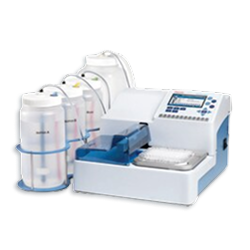
Microplate Washers
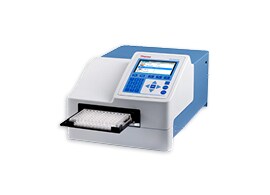
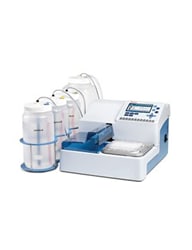
Microplate washers are essential laboratory instruments designed to automate the washing process of microplates, which are commonly used in various assays such as ELISA, cell-based assays, and bead-based assays. Equipped with programmable protocols and adjustable parameters, they provide flexibility and precision, accommodating a wide range of applications.

Useful Links
Save Now - Exclusive Deals

Product Code 15184725
Product Code 11768006
Product Code 11707996
Product Code 11767996
Complete Your Order - Great Deals


Must Have
Product Code 11798006
Product Code 11747996
Product Code 11748006
Product Code 11788006
FAQ
A microplate washer (often called an ELISA washer or automatic microplate washer) is a dedicated instrument for dispensing, aspirating, and washing reagents in microplate-based assays.It is used primarily in ELISA, immunoassays, cell-based assays, and bead-based assays, where consistent washing is critical to remove unbound material and reduce background signal.Compared to manual washing, a microplate washer provides:
- Highly reproducible wash cycles (volume, number of cycles, soak times)
- Lower residual volume and background noise
- Higher throughput and reduced operator variability
Advanced systems support 96- and 384-well plates, and sometimes strip-based formats, making them suitable for both routine clinical workflows and high-throughput screening.
Selection should focus on how accurately and gently the washer can process your specific assays and plate types:
- Residual volume: Low residual volume per well is essential for sensitive ELISA and immunoassays, improving signal-to-noise ratio.
- Dispense and aspiration precision: Uniform dispense across all wells plus controlled aspiration avoid edge effects, cross-contamination, and well drying.
- Wash head and manifold configuration: Options for 96- or 384-channel heads, adjustable needle heights, and 2D aspiration (from specific sides of the well) help protect cells and delicate coatings.
- Programmable protocols: Ability to define number of cycles, soak times, shaking, dispense rate, and aspirate rate for different assay types.
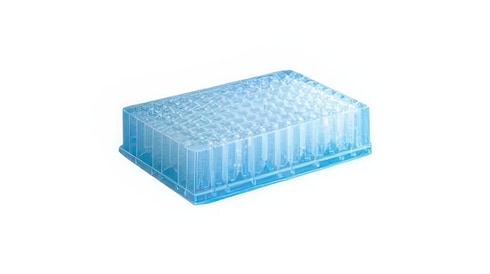
- Compatibility: Support for flat-, U-, and V-bottom plates, deep-well plates, and strip plates ensures flexibility across methods.
Focusing on these parameters ensures consistent assay performance, minimal background, and robust inter-plate reproducibility.
Modern microplate washers include a range of features to support high-throughput labs and regulated environments:
- Advanced wash modes: Bottom washing, overflow washing, crosswise aspiration, and adjustable flow profiles for cell-based assays and gentle monolayer handling.
- Priming, rinse, and decontamination routines: Automated cleaning cycles reduce carryover, biofilm formation, and salt crystallization in lines and manifolds.
- Liquid-handling safety: Liquid level sensing, waste and reagent bottle monitoring, and error alerts to prevent running plates under incorrect conditions.
- Compliance and connectivity: Audit trails, user logins, time-stamped protocols, and data export (e.g., to LIMS) to support GLP/GMP and ISO 17025 requirements.
- Service and validation: Support for IQ/OQ documentation, routine performance checks, and easy access to tubing and manifolds simplifies maintenance and validation.
These capabilities help ensure low carryover, reliable long-term operation, and regulatory-ready documentation in diagnostic, QA/QC, and high-content screening labs.
Top Brands